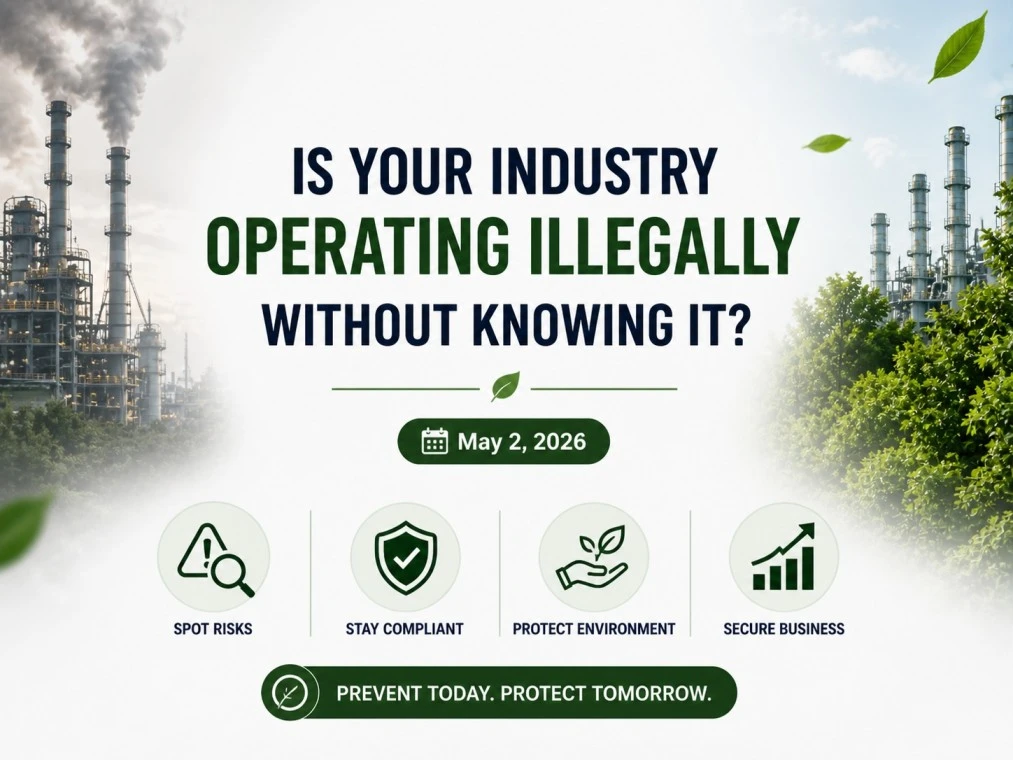
Is Your Industry Operating Illegally Without Knowing It?
Running an industry today is not just about production, profits, and performance — it’s also about rigorous environmental compliance. But here’s a serious question: could your organization be violating environmental laws without even realizing it?
Why Environmental Compliance Is More Critical Than Ever
Environmental regulations in India are becoming stricter each year. Authorities like the Central Pollution Control Board (CPCB) and State Boards actively monitor industries through online monitoring systems, surprise inspections, and digital compliance tracking. Even unintentional non-compliance can result in heavy penalties and legal prosecution.
7 Signs Your Industry Might Be at Risk
1. Expired Consent to Operate (CTO)
Operating even a single day with an expired CTO is treated as unauthorized operation by regulatory authorities.
2. Capacity Expansion Without Approval
Increasing production or adding machinery without fresh approvals is a common violation. Legally, any modification to process requires an updated consent.
3. Improper Hazardous Waste Disposal
Missing manifest records or incorrect labeling can lead to serious environmental compensation charges. The waste generator remains legally responsible until final disposal.
4. Non-Functional ETP/STP Systems
Installation is not enough. Irregular operation or untreated discharge can attract immediate action from environmental authorities.
5. Missing Environmental Monitoring Records
Failure to maintain stack reports, water analysis reports, and logbooks is treated as a major documentation gap by inspectors.
6. No Environmental Clearance (EC)
Certain projects legally require Environmental Clearance before operation—this applies to MSMEs, not just large corporations.
7. Ignoring Law Amendments
Frequent updates in e-waste, plastic waste, and emission norms require your internal compliance systems to be updated regularly.
What Could It Cost You?
- Financial Loss: Legal fees and environmental compensation charges.
- Operational Disruption: Utility disconnection and permanent plant closure.
- Reputation Damage: Blacklisting for government projects and public legal notices.
The Solution: Preventive Environmental Audit
A professional preventive environmental audit identifies hidden risks, updates your documentation, and ensures you are always inspection-ready. Acting early protects your capital, your reputation, and your business continuity.
Verify Your Compliance Status
If you’re unsure about your current regulatory standing, it’s always better to review today than respond to a notice tomorrow.
Book A Technical Audit