
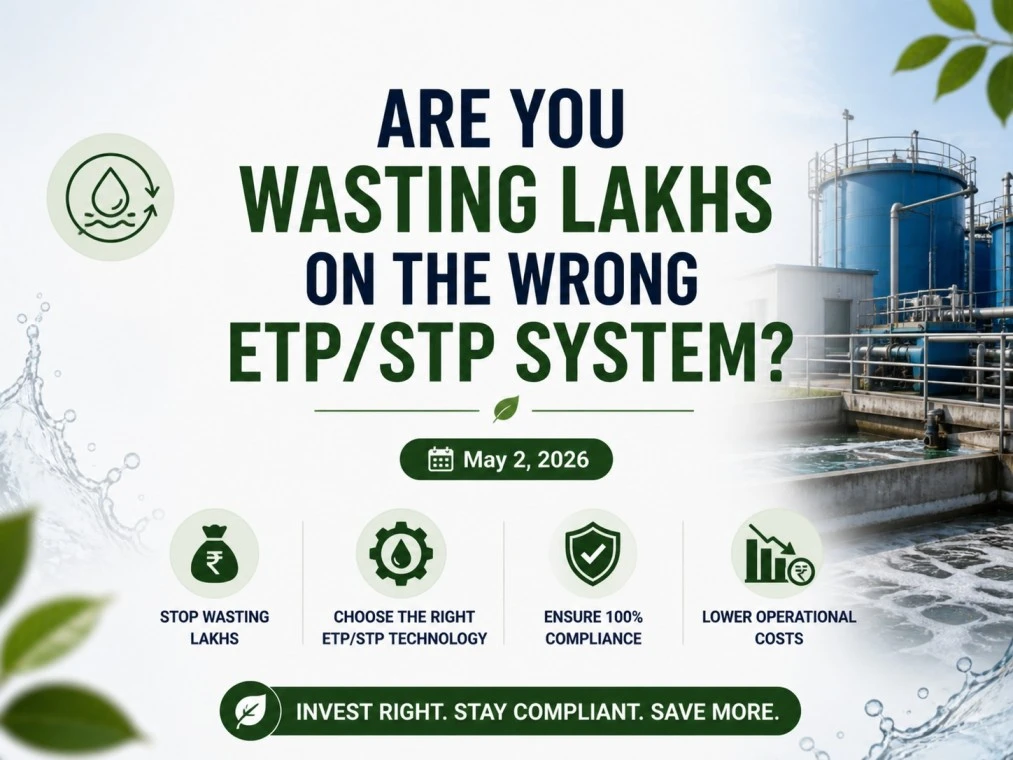
Are You Wasting Lakhs on the Wrong ETP/STP System?
Investing in an ETP (Effluent Treatment Plant) or STP (Sewage Treatment Plant) is not a small decision. Many industries, residential projects, and commercial buildings spend lakhs of rupees on these systems.
Understanding the Difference: ETP vs STP
An ETP is designed to treat industrial wastewater containing chemicals, oils, and toxic substances. Industries like textiles, pharmaceuticals, and food processing require specialized environmental engineering solutions.
An STP treats domestic sewage from apartments and offices. Choosing the wrong type — or the wrong technology within it — can lead to serious financial and operational problems.
Why Companies End Up Wasting Lakhs
1. Buying Based Only on Initial Cost
Low upfront price often leads to poor quality components, higher electricity consumption, and a shorter lifespan. In the long run, you end up paying much more in maintenance.
2. Wrong Technology Selection
Multiple technologies exist, such as MBBR, SBR, and MBR. Each has pros and cons depending on your discharge norms and space. Choosing incorrectly reduces efficiency.
3. Ignoring Future Expansion
Many plants are designed only for current capacity. When your operations expand, retrofitting costs significantly more than planning properly from the beginning.
Signs You Might Have the Wrong System
- Frequent odor issues and sludge management problems
- High electricity bills and repeated mechanical breakdowns
- Non-compliance notices from regulatory bodies
- Treated water not reusable for irrigation or flushing
How to Choose the Right ETP/STP System
Before investing lakhs, you must ask: What is the exact wastewater analysis report? What are the local discharge standards? Who will handle the AMC?
Always work with experienced consultants who conduct proper site evaluation instead of offering a one-size-fits-all solution.
Protect Your Investment Today
Don't make an expensive mistake. Get a professional technical audit of your wastewater requirements.
Request Technical Evaluation